Below is the chapter from two excellent sources along with the original Chinese text. The first source is from a translation by D.T. Suzuki & Paul Carus in 1913 followed by a translation by Stephen Mitchell in 1988.
Chapter 31
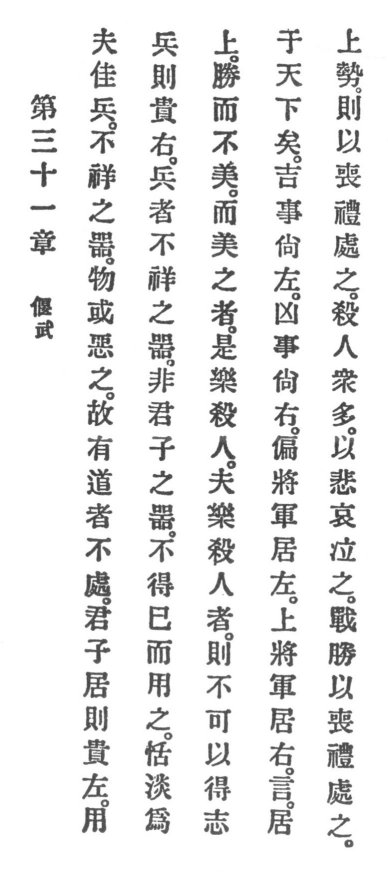
1. Even victorious arms are unblest among tools, and people had better shun them. Therefore he who has Reason does not rely on them.
2. The superior man when residing at home honors the left. When using arms, he honors the right.
3. Arms are unblest among tools and not the superior man's tools. Only when it is unavoidable he uses them. Peace and quietude he holdeth high.
4. He conquers but rejoices not. Rejoicing at a conquest means to enjoy the slaughter of men. He who enjoys the slaughter of men will most assuredly not obtain his will in the empire.
~~~~~~~~~~~~~~~~~~~~~~~
Weapons are the tools of violence;
all decent men detest them.
Weapons are the tools of fear;
a decent man will avoid them
except in the direst necessity
and, if compelled, will use them
only with the utmost restraint.
Peace is his highest value.
If the peace has been shattered,
how can he be content?
His enemies are not demons,
but human beings like himself.
He doesn't wish them personal harm.
Nor does he rejoice in victory.
How could he rejoice in victory
and delight in the slaughter of men?
He enters a battle gravely,
with sorrow and with great compassion,
as if he were attending a funeral.
2. The superior man when residing at home honors the left. When using arms, he honors the right.
3. Arms are unblest among tools and not the superior man's tools. Only when it is unavoidable he uses them. Peace and quietude he holdeth high.
4. He conquers but rejoices not. Rejoicing at a conquest means to enjoy the slaughter of men. He who enjoys the slaughter of men will most assuredly not obtain his will in the empire.
~~~~~~~~~~~~~~~~~~~~~~~
Weapons are the tools of violence;
all decent men detest them.
Weapons are the tools of fear;
a decent man will avoid them
except in the direst necessity
and, if compelled, will use them
only with the utmost restraint.
Peace is his highest value.
If the peace has been shattered,
how can he be content?
His enemies are not demons,
but human beings like himself.
He doesn't wish them personal harm.
Nor does he rejoice in victory.
How could he rejoice in victory
and delight in the slaughter of men?
He enters a battle gravely,
with sorrow and with great compassion,
as if he were attending a funeral.